
Project Details
Location: Kearny, New Jersey
Owner: New Jersey Transit Authority
Contractor: Skanska USA and Traylor Bros. PNB Joint Venture (STJV)
Products Used
– T-Wall®
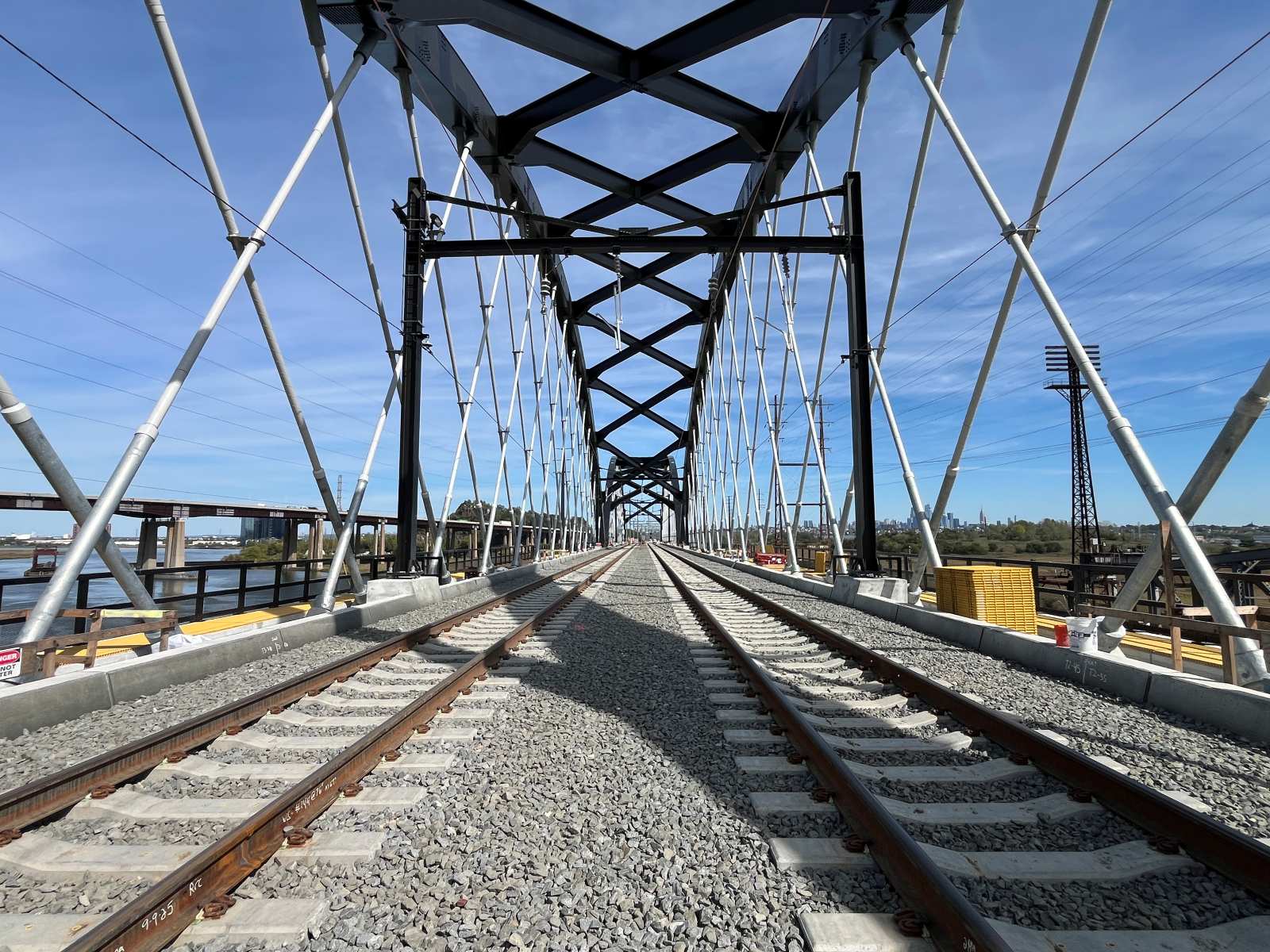
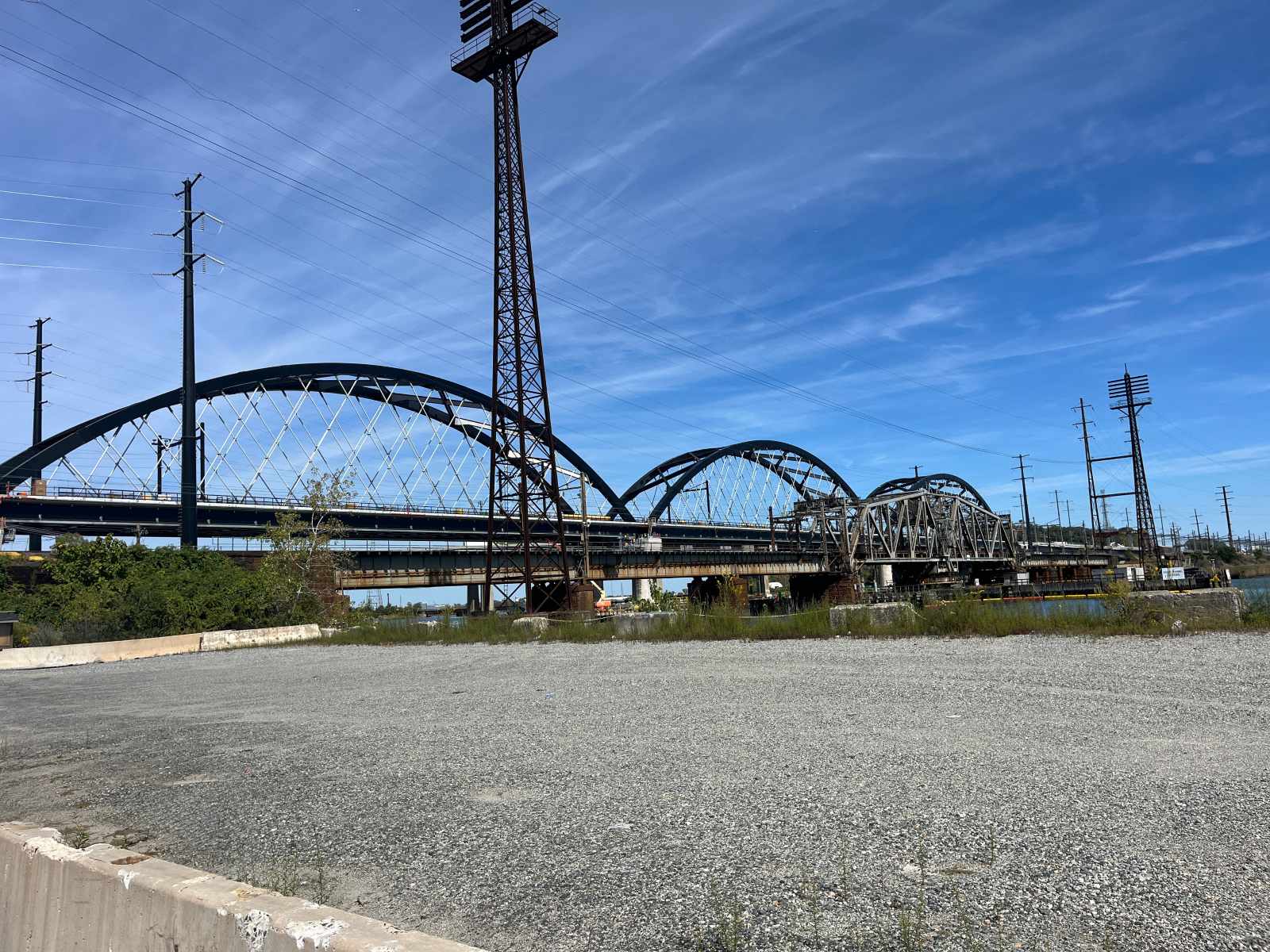
The Portal North Bridge project is replacing a century-old railroad swing bridge over the Hackensack River in New Jersey with a modern, two-track fixed bridge designed to improve reliability and expand capacity along one of the busiest rail corridors in the United States.
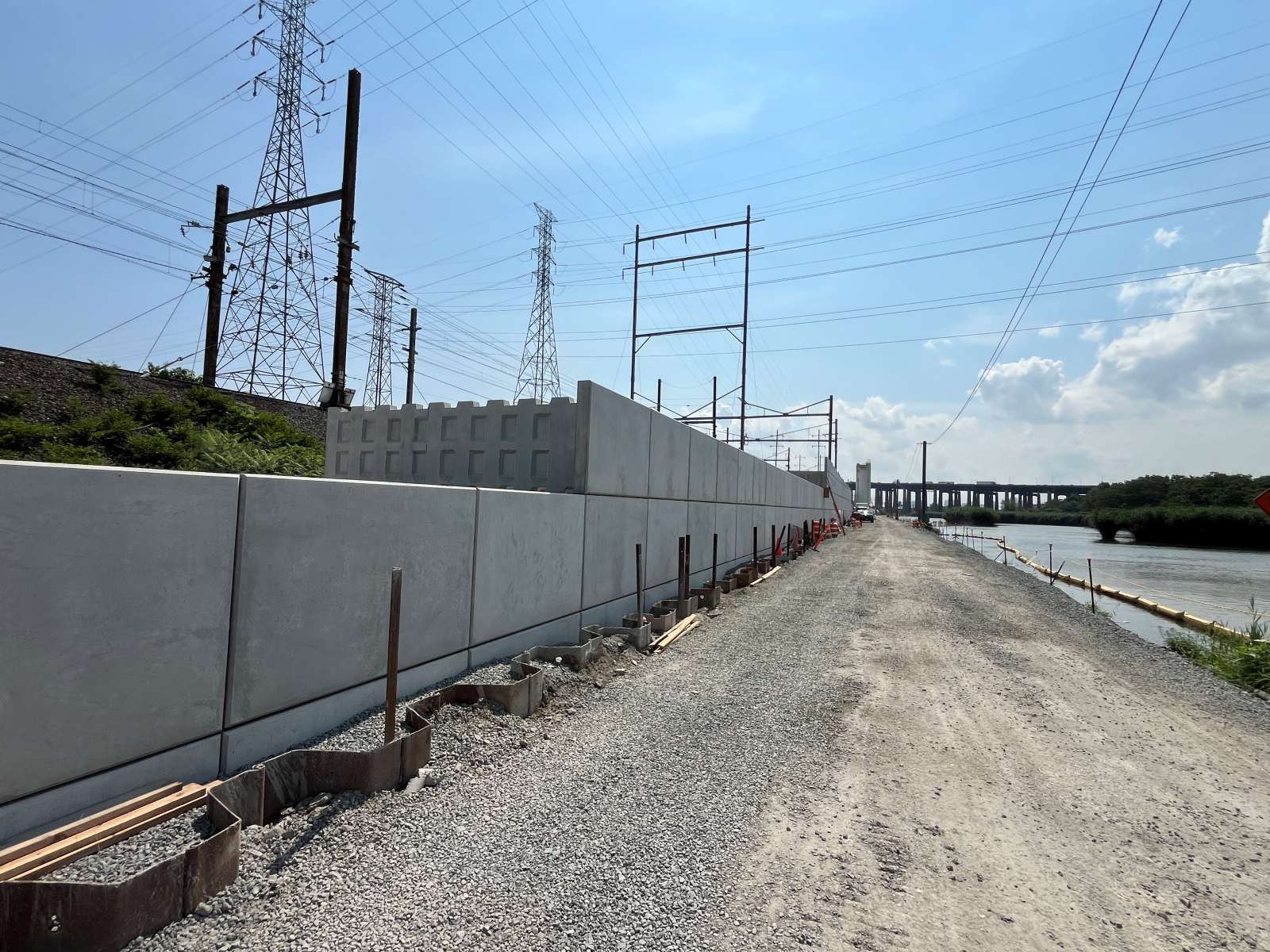
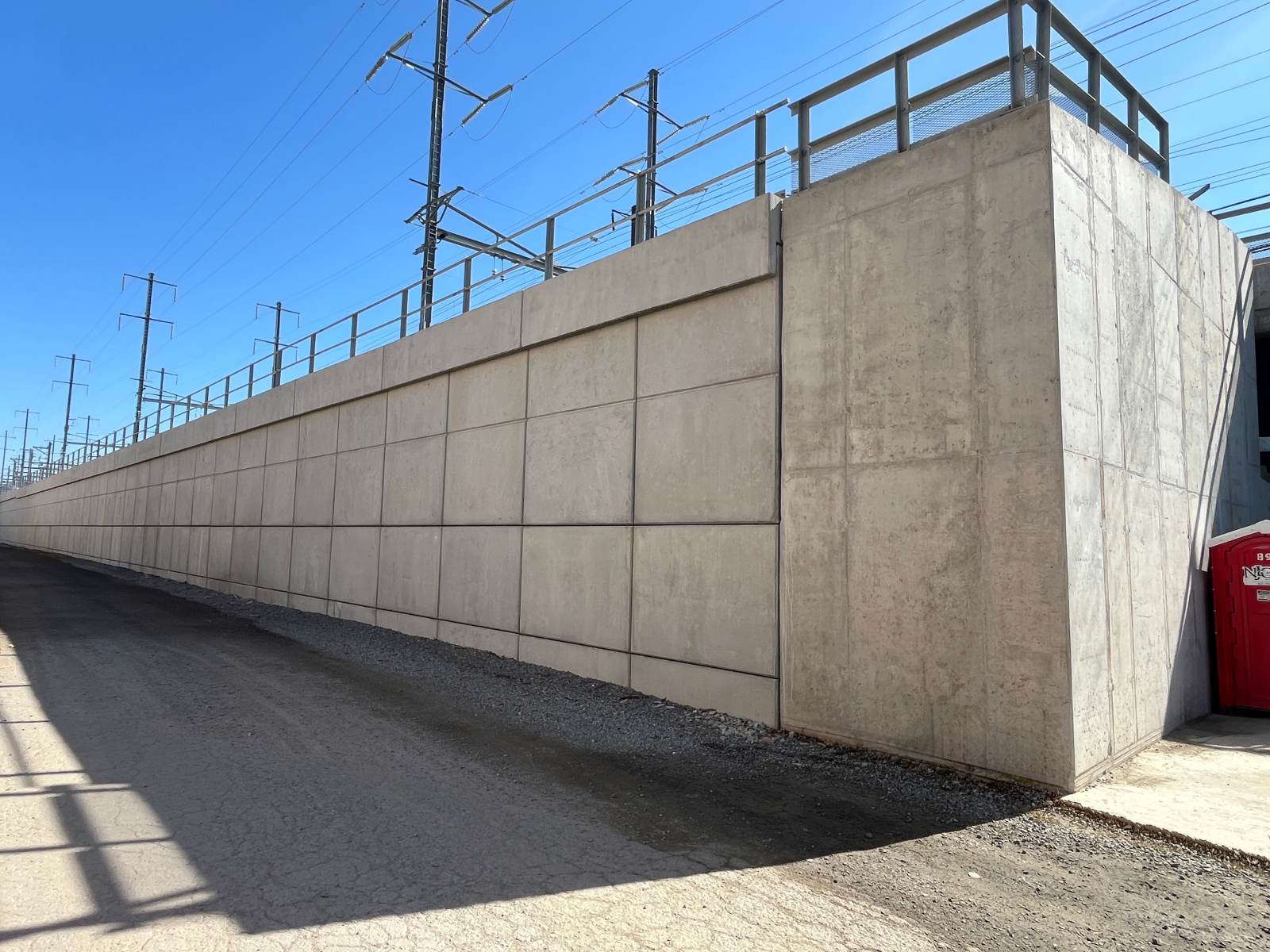
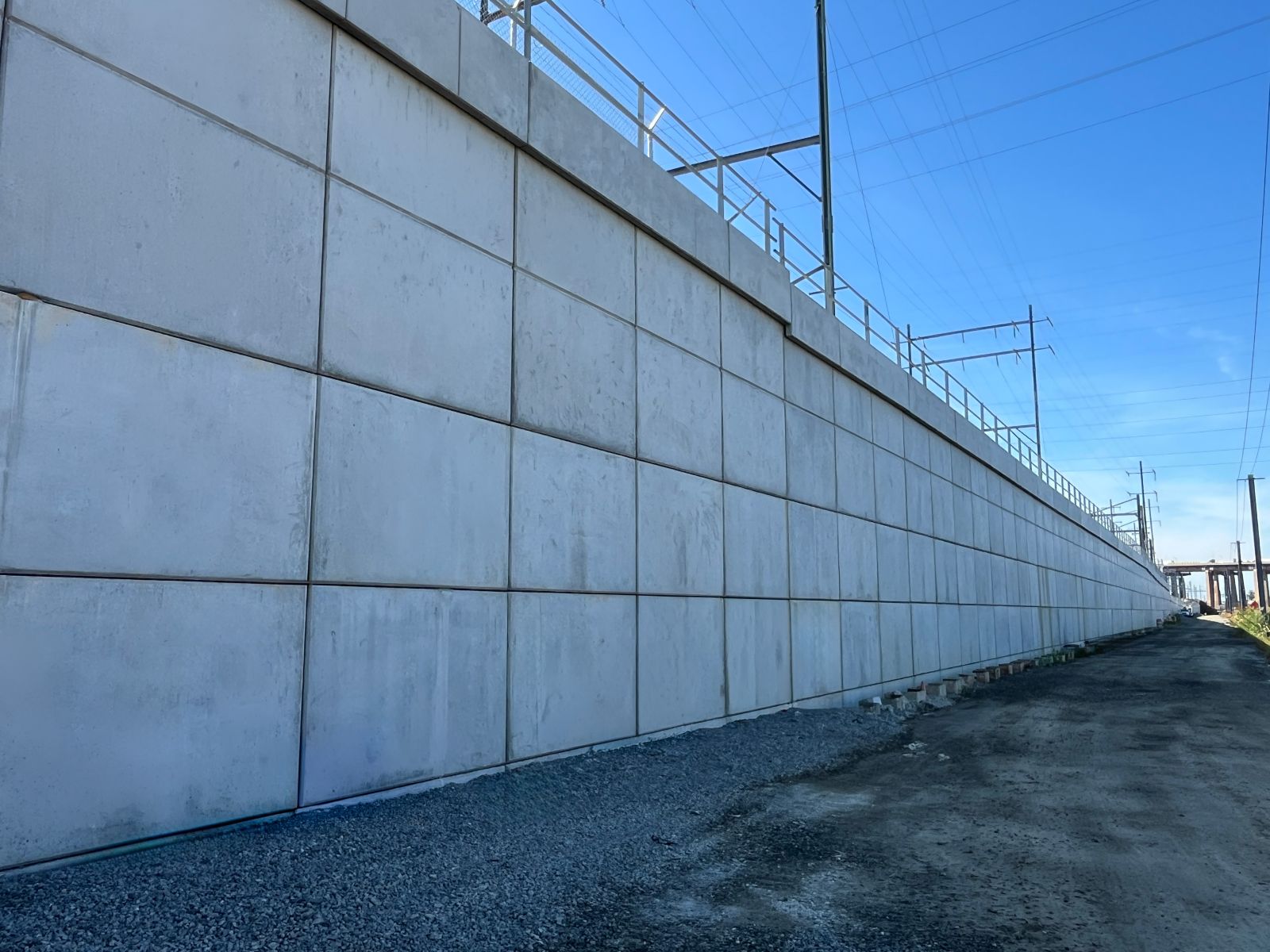
As part of the project, Geoquest USA designed a T-Wall® retaining wall system to support new railroad embankments and infrastructure along the 2.44-mile project corridor between Kearny and Secaucus. The T-Wall structures were designed to accommodate heavy railroad loads, challenging site conditions, limited right-of-way, existing utilities and overhead catenary structures.
Project Overview
The Portal North Bridge project, being advanced by NJ Transit and Amtrak, is a major component of the Gateway Program, which is focused on improving rail infrastructure between Newark and New York.
The new bridge replaces the existing Portal Bridge, a swing-span structure originally built more than a century ago. The aging bridge has become a significant bottleneck for rail traffic, with more than 400 trains carrying approximately 300,000 passengers traveling across the two-track crossing each day.
The new fixed bridge will eliminate the need for the bridge to open for river traffic while providing additional clearance and improved operating conditions for trains. The overall project includes a 1,200-foot main span over the Hackensack River, approximately 6,200 feet of bridge approaches, railroad embankments, track realignment, rail systems and approximately 4,500 linear feet of retaining walls.
With much of the alignment passing through marshland and an active rail corridor, the project presented several significant geotechnical and structural challenges, including high flood elevations, overhead catenary structures, global stability and long term settlement concerns beneath the retaining walls and tracks.
Railroad proven, the T-Wall system by Geoquest USA was selected as the solution to address these challenges.
T-Wall Retaining Wall Solutions for Heavy Railroad Loads
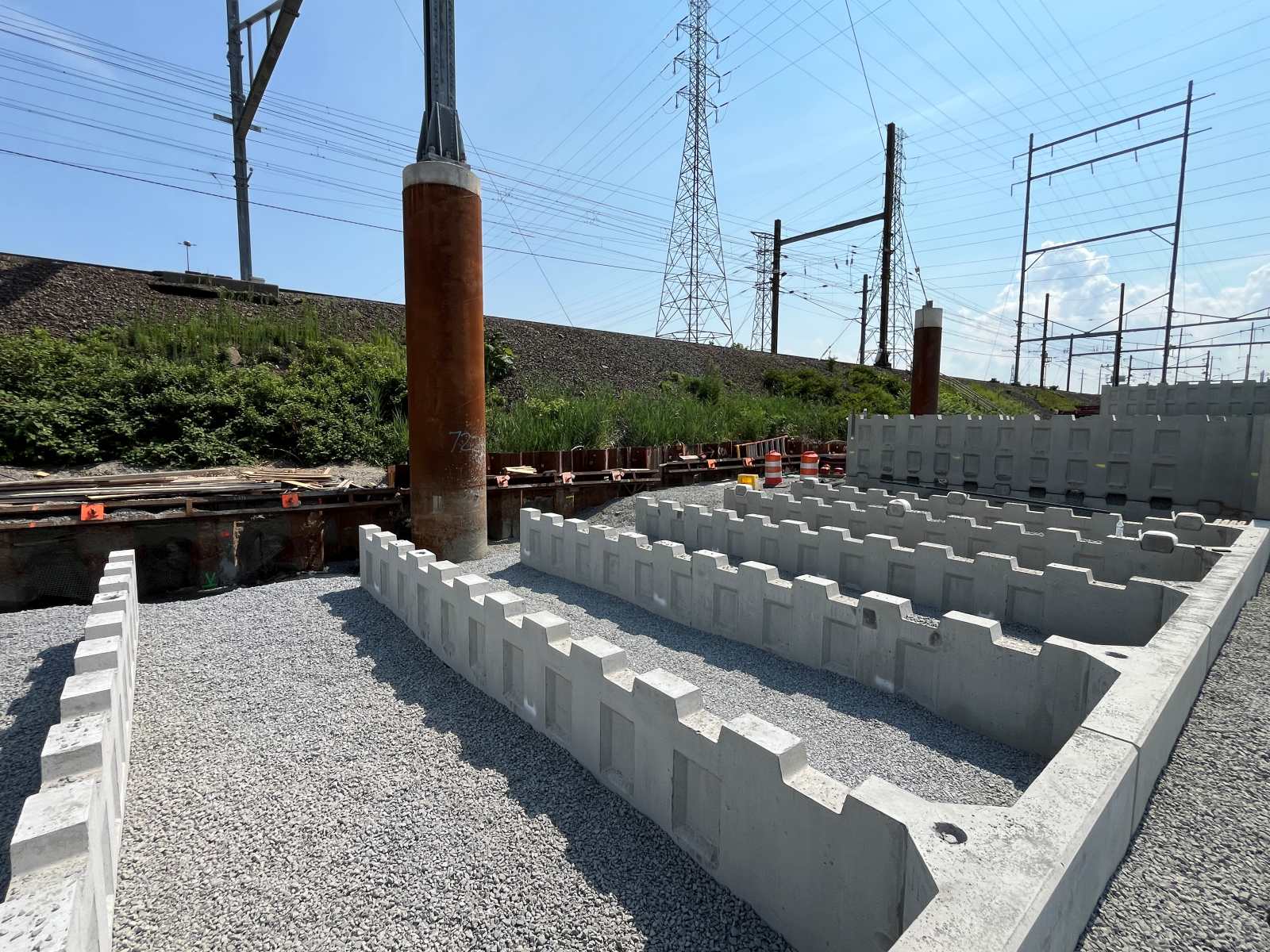
T-Wall is a precast modular concrete retaining wall system composed of reinforced concrete units and compacted granular fill that work together to form a stable gravity mass to resist lateral earth pressure and traffic surcharge loads. Standard T-Wall units are monolithic, compromising a vertical face and stem that extends into the granular backfill.
For Portal North Bridge, the T-Wall structures were designed to support Cooper E-80 loading from multiple railroad tracks, making the walls capable of accommodating the significant loads associated with active rail infrastructure.
The design also accounted for the project’s demanding subsurface and environmental conditions. T-Wall structures incorporated multilayered pervious low-density cellular concrete and stone backfill to address drainage requirements associated with high flood conditions while also meeting bearing capacity, overall stability and settlement requirements.
These considerations were particularly important given the project’s location along the Hackensack River and through surrounding marshland.
Designing Around Utilities and Limited Right-of-Way
The project corridor presented another challenge: there was not always enough space for a conventional retaining wall layout.
Multiple utility structures and duct banks were located within the project area, requiring the T-Wall design to work around existing infrastructure while maintaining access for future maintenance. The wall stems were arranged to remain clear of these structures, helping accommodate the existing utilities without compromising the retaining wall system.
Geoquest also designed a combination of Standard and Inverted T-Wall structures to fit areas with limited right-of-way.
The Standard T-Wall configuration uses longer stems at the base of the wall and shorter stems towards the top of the wall. The Inverted configuration uses shorter stems at the base of the wall and longer stems towards the top of the wall. The Inverted configuration was used at tight right-of-way wall locations.
Custom T-Wall Design for Catenary Structures
The active railroad environment introduced another unique design consideration: overhead catenary structures.
Catenary systems provide the electrical power needed for trains, and their supporting structures impose additional loads that must be considered when designing adjacent infrastructure. For Portal North Bridge, a custom T-Wall design was developed to support catenary structures and the loads they imposed on the retaining wall system.
This required the retaining wall design to account not only for the loads associated with the railroad embankment and multiple tracks, but also for the additional structural demands created by the catenary system.
The result was a retaining wall solution specifically adapted to the project’s complex combination of rail, utility and structural requirements.
Supporting the Future of the Northeast Corridor
Portal North Bridge represents a major investment in the future of rail transportation in the Northeast. By replacing the aging swing bridge with a modern fixed structure and upgrading the surrounding rail infrastructure, the project is designed to improve reliability and increase capacity for the millions of passengers who depend on the Northeast Corridor.
The T-Wall retaining structures designed by Geoquest USA are an important part of that infrastructure, providing support for railroad embankments while navigating the project’s challenging site constraints.
From heavy railroad loading and flood conditions to limited right-of-way, existing utilities and overhead catenary structures, the project demonstrates how T-Wall can be adapted to meet complex infrastructure requirements while providing a durable retaining wall solution for critical transportation facilities.