

Project Details
Location: St. Louis, MO & Venice, IL
Owner: Terminal Railroad Association of St. Louis
Contractor: Walsh Construction Company; St. Louis Bridge Construction; Keeley & Sons, Inc.
Precaster: Champion Precast, Inc.
Products Used
Project Location
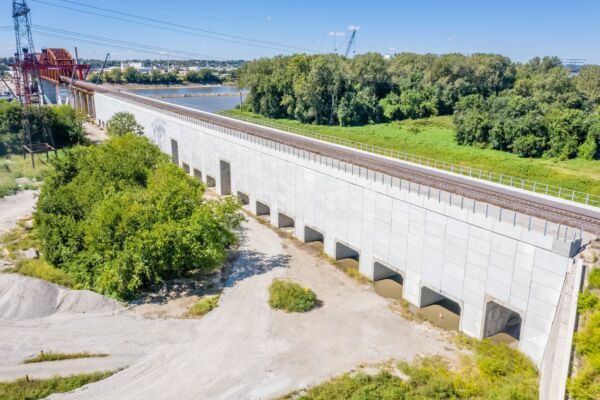
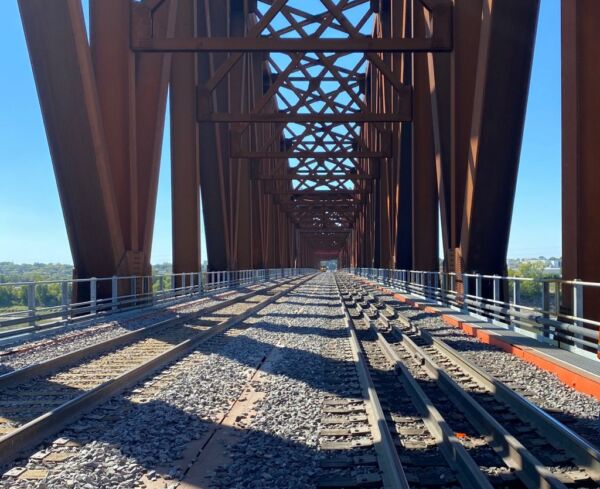
The Merchants Bridge spans the Mississippi River, connecting St. Louis, Missouri, to Venice, Illinois. Originally constructed in the late 1800s, over the decades the structure has undergone numerous maintenance efforts, including replacement of the original timber trestle approaches with steel. As one of the busiest freight rail crossings over the river, the bridge could no longer support the capacity demands of modern rail traffic, and major reconstruction took place from 2018 to 2022.
Project Challenge
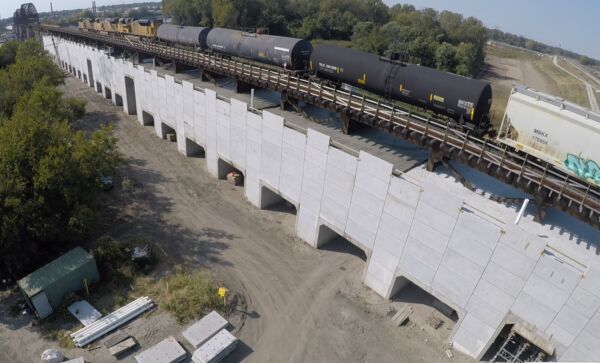
A key challenge for the Owner was maintaining rail service during construction. Given the high volume of freight traffic using the bridge, extended track closures were not a viable option. Completely removing and rebuilding the existing approach trestles would have taken the railroad out of service for months, resulting in significant economic impacts to the freight industry.
Project engineers needed a solution that would allow the bridge approaches to be reconstructed while minimizing disruption to active rail operations. The primary objectives were to reduce construction time, limit track downtime, and maintain safety and performance requirements for the upgraded structure.
A Modified MSE Wall Solution for an Active Rail Corridor
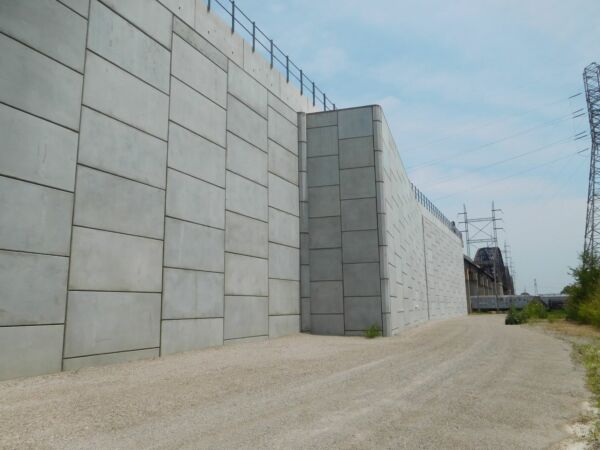
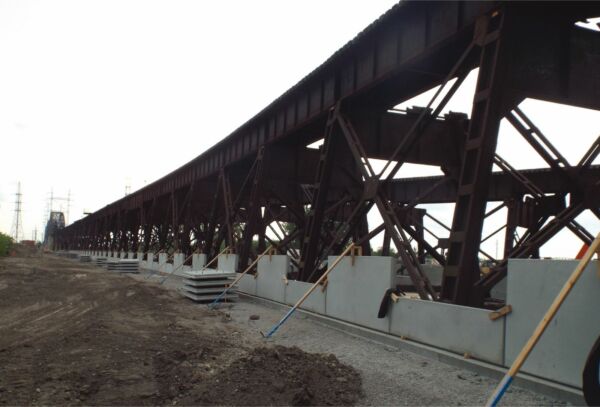
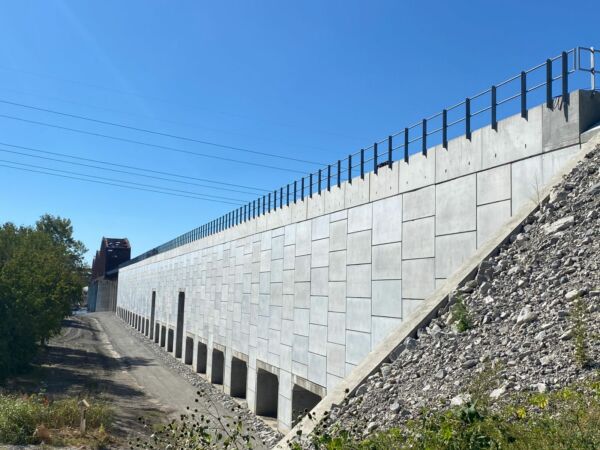
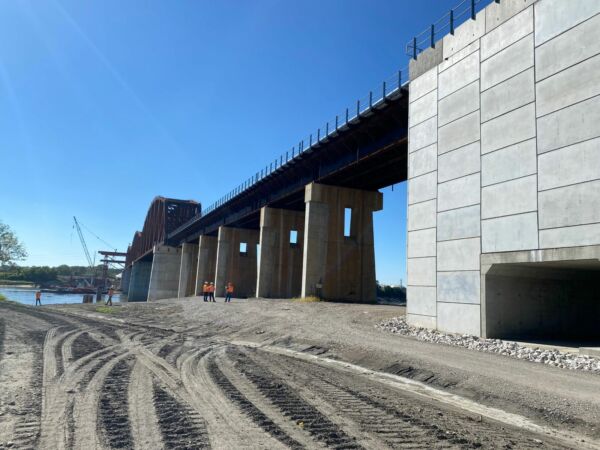
Early in the project, Geoquest USA worked with the contractor to develop a modified MSE wall solution for the bridge approaches. This allowed the existing trestle structure to remain in place during construction, enabling the railroad to continue operating for the majority of the project.
Design, Construction and Benefits
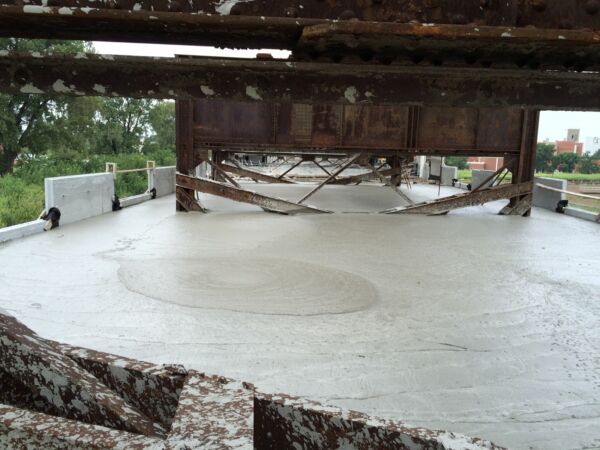
The trestle volume was filled from the bottom-up with low-density cellular concrete (LDCC), enclosed by concrete panels, which were anchored to the fill with steel MSE soil reinforcements. While traditional MSE walls typically use compacted granular backfill, that approach would have required extensive labor and time to place and compact material around the existing trestle.
By contrast, the LDCC was highly flowable, required no compaction, and could be placed in larger vertical lifts than conventional backfill. This significantly accelerated construction and reduced disruption to rail operations. Once the walls reached the required grade, rail traffic was temporarily halted to allow for installation of the new track system.
LDCC fill does not behave like conventional MSE wall select backfill, but the design and construction methods have been implemented on projects with Reinforced Earth wall material for decades. This solution provided substantial schedule and operational benefits for the Merchants Bridge project. Most importantly, it minimized railroad downtime while delivering a durable, high-performing structure.
For more information on the use of LDCC in MSE wall systems, contact Geoquest USA, explore our Lightweight Backfill blog for additional insights, or reference the ASCE Library paper Low-Density Cellular Concrete in MSE Structures with Steel Strip Reinforcements—Design and Construction Considerations and Case Histories.


